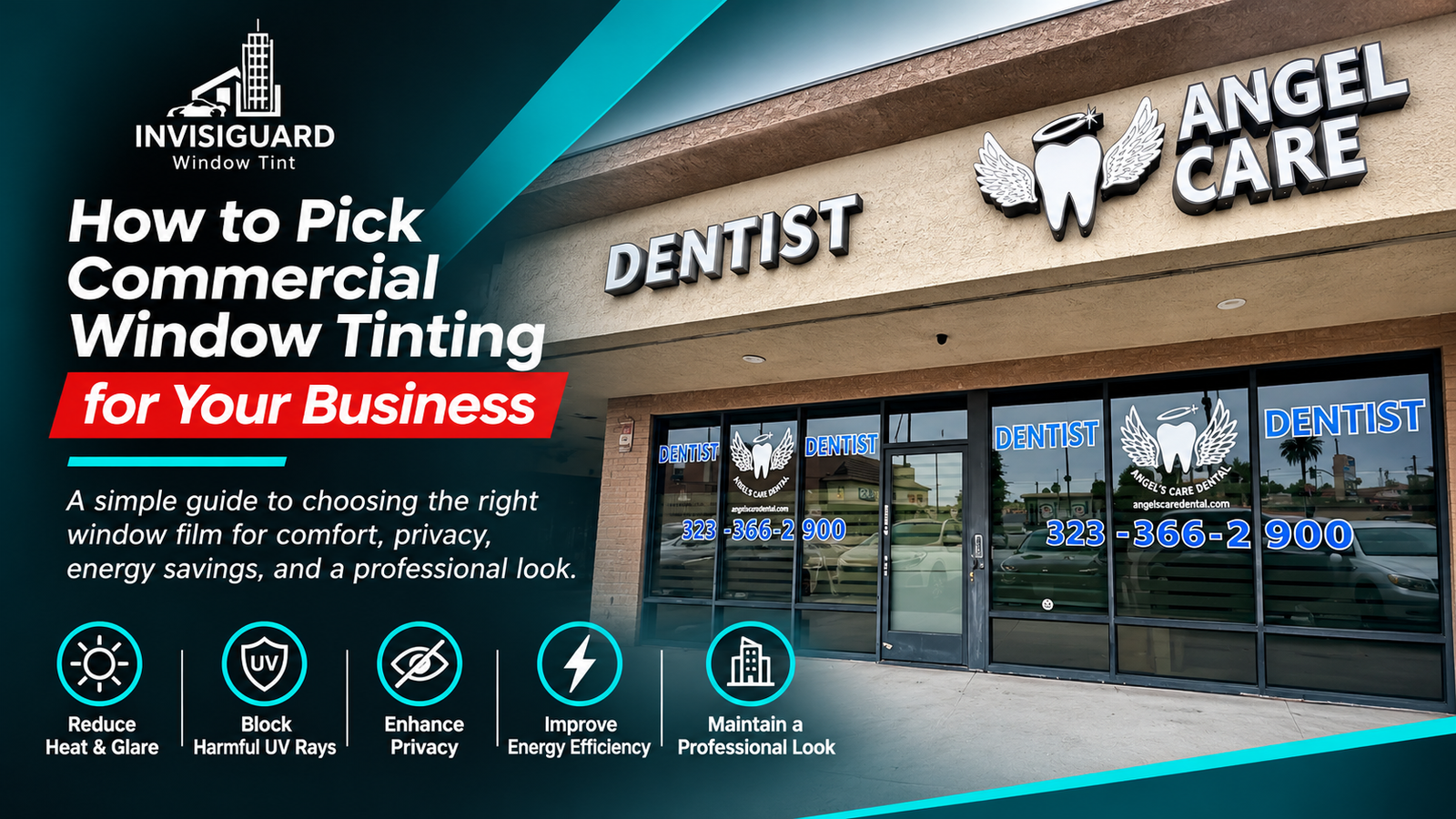
Choosing the right commercial window tinting for your business can improve comfort, reduce glare, enhance privacy, and give your building a more professional appearance. Whether you manage an office, retail store, restaurant, or commercial property, selecting the right window film can make a noticeable difference.
However, not all commercial window films offer the same benefits. Understanding the available options and important features can help you make a better investment.
This guide explains how to pick commercial window tinting for your business, including film types, essential factors, and maintenance tips.
Why Commercial Window Tinting Matters for Your Business
Commercial buildings often feature large glass windows that allow natural sunlight inside. Although natural light creates an inviting atmosphere, excessive sunlight can increase indoor temperatures and cause uncomfortable glare.
Professional commercial window tinting helps address these problems while maintaining your building’s appearance.
Key benefits include:
- Heat Reduction: Helps limit solar heat entering your building.
- Energy Efficiency: May reduce cooling demands and electricity costs.
- UV Protection: Many films block up to 99% of ultraviolet rays.
- Improved Privacy: Limits unwanted visibility into selected areas.
- Glare Reduction: Makes offices and customer spaces more comfortable.
- Professional Appearance: Creates a clean, consistent glass finish.
Actual results depend on the film, existing windows, and building conditions.
Different Types of Commercial Window Tinting
Understanding the available commercial window film options helps you choose the right solution for your property.
Solar Control Window Film
Solar control film reduces solar heat gain and glare through commercial windows. It’s especially useful for offices, restaurants, and storefronts exposed to strong sunlight.
Privacy Window Film
Privacy window film limits visibility into offices, meeting rooms, and other commercial spaces. Frosted films provide consistent visual privacy, while reflective films generally offer better privacy during daylight hours.
Safety and Security Window Film
Safety and security films help hold broken glass fragments together when glass is damaged. They can be useful for storefronts and commercial entrances but do not make windows unbreakable.
Decorative Window Film
Decorative films feature frosted patterns, textures, or custom designs. They improve the appearance of glass partitions while providing additional privacy.
Commercial Window Tinting Types Comparison
| Window Film Type | Main Benefit | Best Application |
|---|---|---|
| Solar Control | Reduces heat and glare | Offices, restaurants |
| Privacy Film | Limits visibility | Meeting rooms, clinics |
| Safety Film | Helps retain broken glass | Storefronts, entrances |
| Decorative Film | Improves appearance | Glass partitions |
| UV Protection | Reduces UV exposure | Retail stores, showrooms |
Some commercial films combine several benefits, making professional guidance valuable when selecting the best option.
Key Factors to Consider When Choosing Commercial Window Tinting
Selecting commercial window tinting requires more than choosing a particular shade. Consider your building’s requirements before making a decision.
1. Evaluate Sun Exposure
Different windows receive different amounts of sunlight. West-facing windows, for example, often experience intense afternoon sunlight.
Identify areas affected by excessive heat or glare. This helps determine where higher-performance solar control film may be beneficial.
2. Choose the Right Tint Darkness
Visible Light Transmission (VLT) measures how much visible light passes through window film or a glazing system.
Higher VLT allows more natural light, while lower VLT produces a darker appearance.
| VLT Level | Light Transmission | Common Use |
|---|---|---|
| 70% | High | Bright office environments |
| 50% | Moderate to high | General commercial spaces |
| 35% | Moderate | Glare-sensitive workspaces |
| 20% | Low | Areas needing darker glass |
| 5% | Very low | Specialized light-control applications |
These are illustrative levels. Actual light transmission depends on the film and existing glass.
Remember, darker window tint doesn’t always provide better heat rejection.
3. Prioritize Heat Rejection
If your building gets excessively warm, choose commercial solar window film with suitable heat rejection performance.
Review specifications such as Total Solar Energy Rejected (TSER) and Solar Heat Gain Coefficient (SHGC). These help indicate how effectively the film and glass system manages solar heat.
4. Consider Privacy Requirements
Different businesses require different privacy levels.
Medical offices and conference rooms may benefit from frosted films, while retail stores often need clear storefront windows.
Choose a film that offers appropriate privacy without unnecessarily reducing natural light.
5. Check Window Compatibility
Not every film works with every glass type.
Insulated windows, Low-E coatings, and certain glazing systems may require special consideration.
A professional installer should assess glass compatibility, thermal stress risks, and applicable building requirements before installation.
Best Commercial Window Tinting for Different Businesses
Different commercial properties benefit from different window film features.
| Business Type | Recommended Film | Primary Goal |
|---|---|---|
| Corporate Offices | Solar control | Reduce glare and heat |
| Retail Stores | UV protection | Help prevent merchandise fading |
| Restaurants | Heat-reducing film | Improve customer comfort |
| Medical Offices | Frosted privacy film | Enhance visual privacy |
| Showrooms | High-clarity solar film | Maintain product visibility |
| Conference Rooms | Decorative privacy film | Create private meeting spaces |
For example, office window tinting should prioritize employee comfort, while storefront window tinting should balance solar protection with visibility.
Common Mistakes to Avoid When Choosing Commercial Window Tinting
Choosing unsuitable window film can affect comfort, appearance, and long-term performance.
Avoid these common mistakes:
- Choosing only by darkness: Darker films aren’t always more effective.
- Ignoring glass compatibility: Unsuitable films may increase thermal stress risks.
- Overlooking nighttime privacy: Reflective films may become less private after dark.
- Buying low-quality products: Poor-quality films may discolor or deteriorate prematurely.
- Skipping professional installation: Improper installation can cause bubbling and peeling.
- Ignoring warranty terms: Always review product and installation coverage.
Comparing film specifications and consulting experienced installers can help prevent unnecessary expenses.
How to Maintain Commercial Window Tinting
Proper care helps preserve your window film’s appearance and performance.
Allow the Film to Cure
Newly installed film needs time to dry. Temporary haziness or moisture pockets may appear during curing.
Follow your installer’s recommended waiting period before cleaning.
Use Gentle Cleaning Products
Clean tinted windows with a soft microfiber cloth and film-safe cleaning solution.
Avoid abrasive pads, sharp tools, and harsh chemicals that may damage the film.
Inspect Your Windows Regularly
Check for lifting edges, discoloration, or persistent bubbles after curing.
Contact your installer if you notice unusual changes rather than attempting repairs yourself.
Is Commercial Window Tinting Worth the Investment?
Professional commercial window tinting can be a practical investment for businesses seeking better indoor comfort, privacy, and solar protection.
Compared with replacing existing windows, compatible window film may provide a more affordable, less disruptive improvement.
Potential savings depend on the building’s location, window orientation, film performance, and energy usage. A professional assessment can help determine the most suitable solution.
Frequently Asked Questions About Commercial Window Tinting
How Long Does Commercial Window Tinting Last?
Quality commercial window films may last 10–20 years or longer, depending on film quality, sunlight exposure, installation, and maintenance. Check the manufacturer’s warranty for specific coverage.
Can Commercial Window Tinting Reduce Energy Bills?
Yes, commercial window tinting may reduce cooling costs by limiting solar heat gain. Actual savings depend on your building and the selected film.
Will Window Tinting Make My Office Too Dark?
Not necessarily. Modern window films can provide heat rejection while allowing substantial natural light into your building.
Can Window Film Be Installed on Existing Commercial Windows?
Yes, many commercial films are designed for existing windows. However, compatibility should be verified before installation.
What Is the Best Commercial Window Tint for Offices?
Solar control films with balanced visible light transmission and strong heat rejection are often suitable for offices. The ideal option depends on your building’s needs.
Choose Professional Commercial Window Tinting With Invisiguard Window Tint
Choosing the right commercial window tinting helps create a more comfortable, attractive, and functional business environment. At Invisiguard Window Tint, we offer professional automotive, residential, and commercial window tinting solutions designed to improve comfort, privacy, and appearance. Our experienced team helps customers explore suitable window film options and delivers careful installations for a clean, professional finish. Whether you’re looking to reduce office glare, improve storefront privacy, or enhance your property’s appearance, contact Invisiguard Window Tint today to find the right window tinting solution for your business.