Natural sunlight makes a home feel warm, inviting, and open. But when direct sunlight pours through your windows, it can also create uncomfortable indoor temperatures, annoying glare, and additional strain on your cooling system.
Many homeowners assume that reducing heat means installing dark window tint or keeping their curtains closed throughout the day.
Fortunately, that’s not always necessary.
Modern residential window tinting can help reduce solar heat gain while allowing plenty of natural light into your home.
The key is choosing a window film designed to balance heat rejection and visible light transmission.
Let’s explore how heat-reducing window film works, which options are available, and how to select the right film without making your living spaces feel dark.
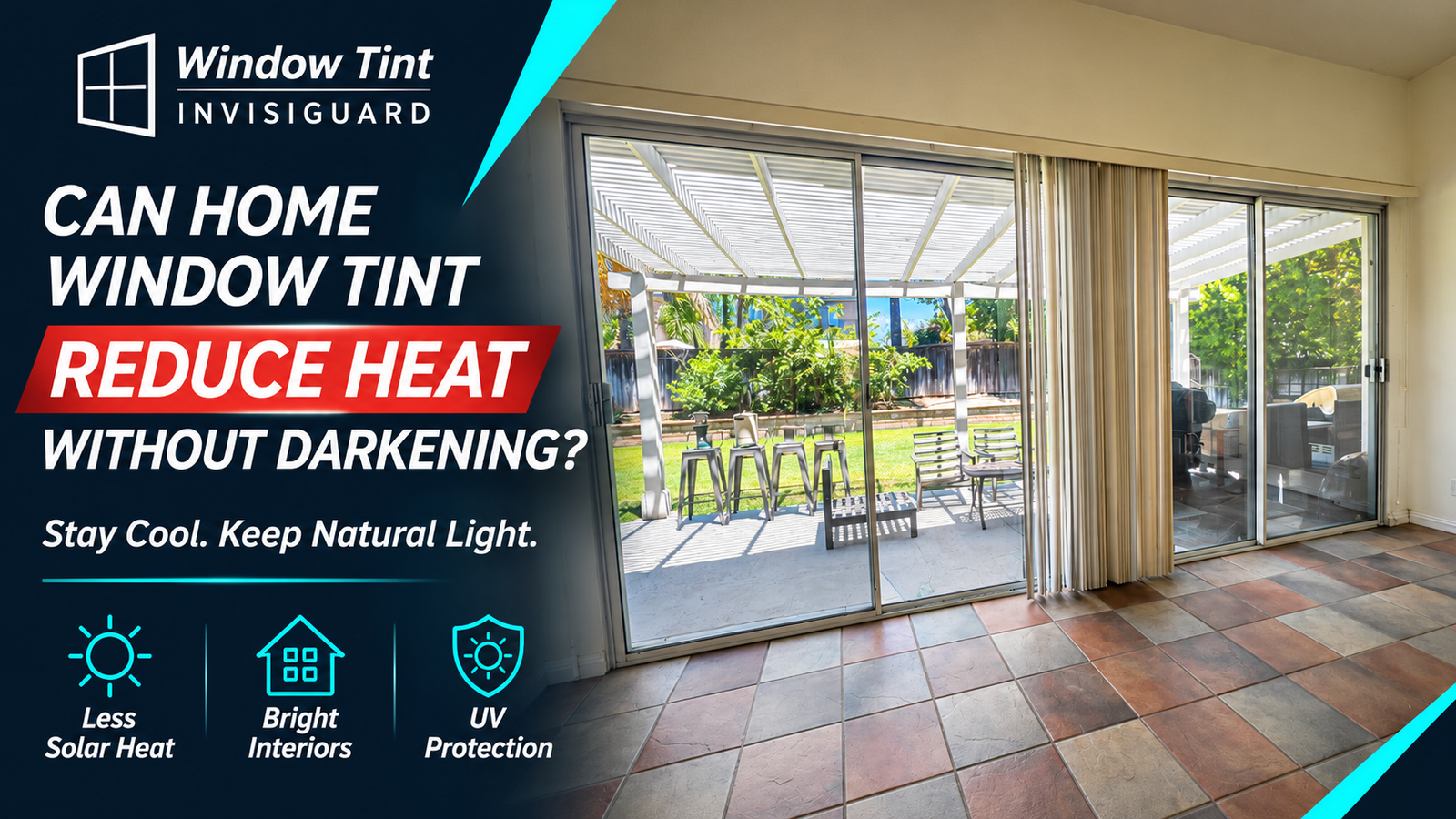
Can Residential Window Tinting Reduce Heat Without Darkening Your Home?
Yes. Certain residential window films are designed to reduce incoming solar heat while maintaining a relatively clear appearance.
Unlike traditional dark window tint, modern solar-control films can selectively reflect or absorb portions of solar energy while allowing much of the visible light to pass through.
This means homeowners may be able to enjoy:
- Reduced solar heat entering through windows
- Bright, naturally lit living spaces
- Less discomfort near sun-exposed windows
- Reduced glare, depending on the film
- Protection against much of the sun’s ultraviolet radiation
- An appearance that closely resembles untreated glass
However, no film offers unlimited heat rejection with absolutely no effect on light or appearance.
The results depend on the film’s specifications, your existing glass, and the amount of direct sunlight your windows receive.
How Does Home Window Tint Block Heat but Allow Natural Light?
Sunlight contains different forms of energy, including visible light, ultraviolet radiation, and infrared radiation.
Residential solar window films manage these different components to help control the amount of solar energy entering your home.
Visible Light
Visible light is the portion of sunlight that allows you to see clearly and illuminates your rooms.
A film with high visible light transmission allows more daylight through the window.
Infrared Radiation
Infrared radiation contributes to solar heat.
Certain advanced window films are designed to reject a portion of this energy, helping reduce unwanted solar heat gain.
Ultraviolet Radiation
Ultraviolet radiation contributes to the fading and deterioration of some furnishings, flooring, and interior materials.
Many residential window films provide substantial UV rejection, helping reduce this exposure.
Together, these features allow appropriately selected films to improve indoor comfort without requiring heavily darkened windows.
Understanding Heat Rejection and Natural Light Transmission
When comparing residential window tinting products, two important measurements are visible transmittance and solar heat gain coefficient.
| Window Film Measurement | What It Means | Why It Matters |
|---|---|---|
| Visible Light Transmission (VLT or VT) | Measures how much visible light passes through the film or window | Higher values generally mean a brighter indoor appearance |
| Solar Heat Gain Coefficient (SHGC) | Measures the fraction of solar heat admitted through the window | Lower values indicate less solar heat enters |
| Total Solar Energy Rejected (TSER) | Describes the portion of solar energy rejected by the film-and-glass system | Helps compare solar-control performance |
| UV Rejection | Indicates how much ultraviolet radiation the film blocks | Helps limit UV exposure and related fading |
| Glare Reduction | Describes how much distracting visible glare is reduced | Helps improve visual comfort in bright rooms |
These measurements help explain why two films with similar appearances can perform differently.
For example, a relatively clear solar-control film may allow substantial daylight while rejecting more solar heat than untreated glass.
When comparing products, ask for performance data measured on a glass type similar to the windows in your home.
What Types of Residential Window Film Reduce Heat Without Blocking Light?
Several window film technologies can help homeowners manage heat and sunlight.
The best option depends on the existing glass, desired appearance, and performance goals.
1. Clear or Nearly Clear Solar-Control Window Film
Clear solar-control films are designed for homeowners who want to preserve the appearance of their existing windows.
Depending on the product, they may reduce solar heat gain while allowing a high percentage of visible light to pass through.
These films can be suitable for:
- Living rooms with large windows
- Homes with scenic outdoor views
- Bright kitchens and dining areas
- Spaces where maintaining natural light is a priority
Although these films can be relatively transparent, some may still produce subtle changes in reflection or color.
2. Spectrally Selective Window Film
Spectrally selective films are engineered to manage different wavelengths of sunlight differently.
Their purpose is to reduce selected portions of solar energy while preserving a relatively high level of visible light transmission.
They can be a useful option for homeowners who want solar heat control without significantly darkening their windows.
3. Reflective Solar Window Film
Reflective films help control solar heat by reflecting a portion of incoming sunlight.
Some products provide strong heat reduction, but their reflective appearance may be more noticeable.
They may also change how the windows look from inside or outside.
If preserving the original glass appearance is your priority, ask your installer to compare reflective options with more transparent alternatives.
Clear vs. Dark Residential Window Tint: What’s the Difference?
A common misconception is that darker window tint always provides better heat rejection.
In reality, appearance alone does not determine performance.
A well-designed, relatively clear solar-control film may reject more solar heat than a darker film with less effective solar-control properties.
| Feature | Clear or Light Window Film | Dark Window Film |
|---|---|---|
| Natural daylight | Generally preserves more | Generally reduces more |
| Indoor appearance | Usually brighter | More shaded |
| Outdoor visibility | Often easier to maintain | May appear darker |
| Solar heat rejection | Depends on film technology | Depends on film technology |
| Glare reduction | Often moderate | May be stronger |
| Privacy | Usually limited | May offer more daytime privacy |
| Best suited for | Bright rooms and open views | Rooms needing more shading or glare control |
The most effective choice depends on more than how dark the film appears.
For homeowners concerned about indoor heat, comparing tested solar performance is more useful than choosing a film based on shade alone.
Benefits of Heat-Reducing Residential Window Tinting
Residential window tinting can improve home comfort in several ways.
Helps Reduce Unwanted Indoor Heat
Sun-exposed windows can allow significant amounts of solar energy into your home.
Solar-control film helps reduce this heat gain, particularly in rooms exposed to strong sunlight.
This can make certain areas of the home more comfortable during hot, sunny weather.
Preserves Natural Daylight
One of the biggest advantages of lighter solar-control films is their ability to maintain a bright indoor environment.
You may be able to enjoy sunlight and outdoor views without relying as heavily on curtains or blinds for heat control.
Helps Improve Cooling Efficiency
By reducing solar heat gain, window film may help decrease the cooling load on your air-conditioning system.
Actual energy savings depend on several factors, including:
- Window size and orientation
- Existing glass performance
- Film specifications
- Local climate
- Home insulation
- Cooling habits
Window film should be viewed as one part of a broader home comfort and energy-efficiency strategy.
Helps Protect Interior Furnishings
UV radiation and sunlight exposure contribute to fading in furniture, flooring, artwork, and fabrics.
Residential window film can reduce UV transmission, helping limit one contributor to interior fading.
However, UV protection does not eliminate every cause of fading.
Reduces Uncomfortable Glare
Direct sunlight can create glare on televisions, computer screens, and other reflective surfaces.
Certain window films help reduce this glare, making sun-exposed rooms more comfortable for everyday activities.
Which Rooms Benefit Most From Residential Window Tinting?
Not every room needs the same level of solar protection.
The amount of sunlight entering a room depends on window direction, surrounding shade, and the time of day.
Living Rooms With Large Windows
Large windows provide beautiful views but can allow considerable solar heat gain.
A relatively clear window film can help maintain the open appearance while improving comfort.
West-Facing Rooms
West-facing windows often receive strong afternoon sunlight.
These rooms may experience uncomfortable heat during warmer parts of the day.
Solar-control window film can help reduce the amount of solar energy entering through these windows.
Home Offices
Sunlight reflecting off computer monitors can make working uncomfortable.
A carefully selected film may help reduce glare while maintaining enough daylight for a productive workspace.
Bedrooms
Sun-exposed bedrooms may become warmer during the day.
Residential window tinting can help manage solar heat gain, though a darker film or additional window treatments may be preferable if light reduction is also a priority.
Will Residential Window Tint Affect Your View Outside?
High-visible-transmission films are designed to preserve outdoor visibility.
However, the final appearance varies by product.
Some films are nearly clear, while others introduce a subtle tint or reflective finish.
Before choosing a film, consider:
- How much natural light you want to maintain
- Whether you prefer a neutral glass appearance
- How the film looks during daytime and nighttime
- Whether exterior reflections are acceptable
- Whether you also need privacy or glare reduction
Reviewing actual film samples can make the selection process easier.
What Should You Consider Before Installing Home Window Tint?
Choosing residential window film involves more than finding a product with good heat-rejection numbers.
Check Your Existing Window Glass
Not every film is appropriate for every type of glass.
Certain films can increase heat absorption in the glass, potentially creating thermal stress or affecting insulated glass seals.
A professional should assess the window’s construction and condition before recommending installation.
Review Window Warranties
Some window manufacturers place restrictions on aftermarket film installation.
Check your existing window warranty and ask about the film manufacturer’s warranty before proceeding.
Compare Verified Performance Ratings
Look for product information that explains visible light transmission, solar heat gain, and other relevant performance characteristics.
Where available, ratings from recognized testing or certification programs can make comparisons more reliable.
Consider Your Home’s Orientation
The ideal film may differ between east-facing, west-facing, and shaded windows.
A professional assessment can help determine which rooms would benefit most from additional solar control.
Frequently Asked Questions About Residential Window Tinting
Can clear window tint really reduce heat?
Yes. Certain clear or nearly clear solar-control films can reduce solar heat gain while allowing substantial visible light through the glass. The level of heat reduction depends on the film and window combination.
Will residential window tint make my house dark?
Not necessarily. High-visible-transmission films can maintain a bright appearance. However, all films should be evaluated for their actual light transmission and visual characteristics.
Does home window tint help reduce air-conditioning use?
It may. By limiting solar heat entering through windows, certain films can reduce cooling demand. The amount of energy saved varies according to the home, climate, and window conditions.
Can window film provide heat reduction and UV protection?
Yes. Many residential solar-control films offer both benefits, although their heat-rejection and UV-rejection capabilities vary by product.
Enjoy a Cooler, Brighter Home With Invisiguard Window Tint
You shouldn’t have to sacrifice natural light to make your home more comfortable.
With the right residential window film, it’s possible to reduce unwanted solar heat, limit glare, and help protect interior furnishings while maintaining the bright, welcoming atmosphere you enjoy.
At Invisiguard Window Tint, we provide professional residential window tinting solutions for homeowners throughout the San Gabriel Valley and surrounding communities. Our team helps you explore window film options based on your home’s glass, sunlight exposure, comfort needs, and preferred appearance.
Whether you’re looking to reduce afternoon heat in your living room or improve comfort around large, sun-facing windows, Invisiguard Window Tint can help you find a suitable solution.
Contact Invisiguard Window Tint today to learn more about residential solar window film and schedule a consultation for your home.